
















Dallas DWI Lawyers Focused On Evidence
Board certified criminal defense attorneys who spent years prosecuting cases before they started winning them for the defense.


A first offense DWI is usually filed as a Class B misdemeanor, elevated to Class A when a test shows an alcohol concentration of 0.15 or higher. The case still threatens your license, your insurance rates, and a permanent record, because a DWI conviction cannot be expunged in Texas. Our attorneys examine the stop, the field tests, and the chemical evidence before advising you on anything. Many first-time clients have more options than they realize, including resolutions that preserve future record-clearing eligibility.
A second DWI is a Class A misdemeanor carrying mandatory jail exposure and longer license suspensions, and prosecutors treat a repeat DWI as proof of a pattern. Defending these cases means more than negotiating. It means auditing whether earlier convictions are valid enhancements and whether the new evidence holds together on its own. We challenge the current arrest on its merits while scrutinizing the paperwork behind every prior conviction the State intends to use against you.
A third DWI arrest is charged as a third-degree felony in Texas, punishable by two to ten years in prison and a fine of up to $10,000. A felony conviction also strips civil rights and closes professional doors for life. Cases this serious call for a felony DWI lawyer who tries cases, not one who only settles them. We prepare every felony DWI for trial from the first meeting, which changes how prosecutors evaluate the file long before a jury is ever selected.
Driving while intoxicated with a passenger younger than 15 is a state jail felony even on a first arrest, and it frequently draws parallel attention from child welfare authorities. The stakes reach beyond the courtroom into custody and family life. Our team moves on both fronts at once, contesting the intoxication evidence itself while working toward a resolution that protects your record and your role as a parent.
Texas breath testing relies on Intoxilyzer instruments that estimate blood alcohol from a breath sample, and that estimate depends on proper calibration, a certified operator, a mandatory observation period, and physiological assumptions that do not fit everyone. We obtain maintenance records, operator credentials, and reference sample data, then look for the gaps. A breath number is only as reliable as the machine and the procedure behind it, and both can be challenged.
Blood evidence feels definitive to jurors, which is exactly why it deserves the hardest look. A valid result requires a lawful warrant or consent, a proper draw, an unbroken chain of custody, correct storage, and accurate gas chromatography analysis at the laboratory. Errors occur at every stage. Our attorneys review lab records, analyst qualifications, and warrant affidavits line by line, and we retain independent experts when the science warrants a second opinion.
A DWI arrest starts a separate civil case against your driver's license. You have 15 days to request an Administrative License Revocation hearing; miss that deadline and the suspension begins automatically on day 40. As ALR hearing lawyers, we request these proceedings routinely, and not only to fight the suspension. An ALR hearing lets us question the arresting officer under oath months before trial, locking in testimony that often becomes the backbone of the criminal defense.
If your license is suspended, Texas law allows a court-ordered occupational driver's license so you can drive to work, school, and essential household duties. Obtaining one requires a petition, proof of financial responsibility, and sometimes an ignition interlock device, with requirements that vary by court and driving history. We handle the filings and the appearances so that a suspension does not cost you your job while the underlying case is still being fought.
Some drivers do not fit neatly into the standard occupational license framework, including younger drivers and people carrying layered or overlapping suspensions. Restricted driving relief may still be available. Eligibility depends on the reason for the suspension, prior orders, and any interlock requirements. We evaluate every lawful path back to driving, explain what each option demands, and pursue the one that restores your mobility fastest without jeopardizing the criminal case.
When an allegedly intoxicated driver causes serious bodily injury to another person, Texas charges intoxication assault, a third-degree felony. These cases turn on two disputed questions: whether the driver was actually intoxicated and whether intoxication, rather than road conditions or another driver's choices, caused the injury. Accident reconstruction, medical records, and toxicology all come into play. We build the defense around the causation evidence the State would prefer to gloss over.
A fatality allegation is the most serious DWI-related charge in Texas, a second-degree felony carrying up to 20 years in prison. Grief and public pressure push these cases toward fast conclusions, which makes independent investigation essential. Our attorneys retain reconstruction and toxicology experts early, work to preserve physical evidence before it disappears, and hold the State to its full burden of proving both intoxication and causation beyond a reasonable doubt.
Texas enforces a zero-tolerance rule for drivers under 21. Any detectable amount of alcohol supports a charge, and a young driver at a 0.08 concentration faces the same DWI statute as an adult. A conviction can shadow college applications, professional licensing, and an early career. We defend these cases with the long view in mind, pressing for outcomes that keep young records clean and preserve expunction eligibility wherever the law allows.
An alleged probation violation, from a missed class to a flagged interlock reading, can bring a motion to revoke and an arrest warrant. The State's burden at a revocation hearing is lower than at trial, so preparation matters even more. We respond fast, address bond, and present the full context behind the allegation, working to keep clients on supervision or restructure its terms rather than watch probation convert into jail time.
Texas allows expunction when a DWI charge ends in acquittal, dismissal, or no-bill, erasing the arrest from public records. A conviction cannot be expunged, though certain first-time DWI convictions qualify for an order of nondisclosure that seals the record from most private employers. The defense strategy you choose today determines which doors stay open tomorrow, so we map record-clearing eligibility at the start of every case, not after it ends.
Not sure which of these describes your situation? That is what the evaluation is for.
Schedule your Free Case Evaluation.
Dallas DWI Lawyers is a Texas criminal defense team with a deliberately narrow focus: defending people accused of driving while intoxicated and the offenses that surround it. The practice is led by Gary L. Medlin, licensed in Texas since 1983 and Board Certified in Criminal Law by the Texas Board of Legal Specialization since 1989. Before devoting his career to the defense, he spent nearly a decade prosecuting cases as an assistant district attorney. A second attorney on our team served six years in a district attorney’s office as well. Combined, our lawyers bring more than 70 years of criminal courtroom experience to every file.
That background shapes everything downstream. Former prosecutors read an offense report differently. They can see which facts the State will lean on, which witnesses will hold up under oath, and where a case is thinner than its paperwork suggests. A Dallas DWI attorney who has built prosecutions from the inside starts dismantling them with a map instead of a flashlight.
I would high recommend this firm
Just wanted to thank the Medlin Law Firm for representing me in my DWI this past year. Especially EJ and Iana Letson. I would high recommend this firm and Ed ( EJ ) to anyone who needs a criminal Defense team and Attorney for their case. Ed attended all my hearings on time and negotiated my 2nd DWI down to a 1st DWI. Probation and no Jail time
Johnny B Evans

I want to thank everyone at Medlin Law Firm
I want to thank everyone at Medlin Law Firm. EJ Has to be the best DWI attorney on this side of the Mississippi. Love the guy. EJ, I can't thank you enough. All the best to everyone at the firm. Eternally grateful and I highly recommend
Steven Bradford
Medlin Law Firm is the way to go
If you need strong, compassionate criminal defense or DWI lawyer in Dallas/Fort Worth, Medlin Law Firm is the way to go.
Olga Marks
they fight hard, pay attention to the details, and consistently deliver excellent results
This is a legal team -DWI and criminal defense attorneys- that doesn’t just go through the motions—they fight hard, pay attention to the details, and consistently deliver excellent results. If someone I cared about needed strong, reliable representation in a criminal case, the Medlin Law Firm would be my first recommendation!
Anzhelika Vora
If you ever need great DWI attorney - hire Medlin Law Firm!
If you ever need great DWI attorney - hire Medlin Law Firm! Gary, the owner, is on top of everything! He is really cares about his clients
Natalya Synelnykova
Gary is a gentleman & a scholar
Gary is a gentleman and a scholar who helped me out recently when I was in a bind and needed some help on a case that had some Texas implications. He was Johnny on the spot, interrupted his weekend, and followed through perfectly. I am glad not only to call him a colleague, but also my friend.
F.D.

extremely knowledgeable
I have known and worked with Gary for many years. He is an outstanding advocate for his clients and is extremely knowledgeable.
Sherry A.
the “go-to” lawyer in Tarrant County
I endorse this lawyer. Gary Medlin is a “stand-up” criminal lawyer and the “go-to” lawyer in Tarrant County for ALR hearings. I have regularly hired him as local counsel in Fort Worth and I will continue to do so.
Lawrence B.
his personal & professional integrity is beyond reproach
I have known Gary Medlin for the better part of the past 20+ years. Highly intelligent and super conscientious, Gary genuinely cares about taking care of the rights of his clients. Further, his personal and professional integrity is beyond reproach...
M. Krugler
I endorse this lawyer
Tom H.
Dallas is a driving city, and most DWI arrests here begin with something unremarkable. A late dinner in Uptown. A show in Deep Ellum. A drive back to Lake Highlands after a delayed flight into Love Field. Then the lights come on somewhere along US-75 or I-35E, and an ordinary night becomes a criminal case in Dallas County.
Local defense starts with local geography. Enforcement concentrates where nightlife and highways meet: the corridors feeding out of Deep Ellum onto I-30, the Dallas North Tollway ramps that carry traffic home from Uptown toward Preston Hollow and North Dallas, the Cedar Springs strip in Oak Lawn, and the restaurant blocks of Bishop Arts in north Oak Cliff. Patterns shift with the calendar, too. The weeks around the State Fair bring saturated patrols near Fair Park, and holiday weekends often mean no-refusal initiatives, with judges on standby to sign blood warrants around the clock. An attorney who defends cases in this city recognizes those patterns in an offense report immediately.
Nearly every DWI arrest in the county, regardless of which agency made it, is prosecuted by the Dallas County District Attorney’s Office and heard at the Frank Crowley Courts Building just west of downtown Dallas. Misdemeanor cases go to the county criminal courts. Felony DWIs, intoxication assault, and intoxication manslaughter cases are assigned to the felony district courts. Each court manages its docket in its own way, from how settings are scheduled to how discovery disputes get resolved to what a judge expects before hearing a motion. Attorneys who appear in these courts week after week learn those rhythms, and clients feel the difference in shorter timelines and fewer surprises.
The people across the aisle matter as well. Prosecutorial filing practices, reduction policies, and diversion criteria in Dallas County evolve with each administration, and they differ meaningfully from neighboring counties. A defense calibrated to how Dallas actually charges and resolves cases today will outperform one built from a statewide template every time.
A lawyer defending a Dallas DWI from a distance misses what a Dallas lawyer reads at a glance: which stretch of I-30 the stop occurred on and what the video from that corridor typically shows, which facility analyzed the blood, which court will receive the filing, and how quickly that court moves. From White Rock Lake to Bishop Arts, from Preston Hollow to Deep Ellum, people from every corner of this city end up facing the same charge in the same building. The ones who fare best share one habit: they put a defense in motion early.
If you were arrested anywhere in Dallas County, the clock is already running. Schedule your Free Case Evaluation.
Texas created the first attorney board certification program in the country in 1974 through the Texas Board of Legal Specialization, and its standards remain demanding. To become Board Certified in Criminal Law, an attorney must practice for years with substantial, documented involvement in criminal matters, complete specialized continuing legal education, pass confidential evaluations by judges and fellow lawyers who have seen the attorney’s work firsthand, and pass a rigorous daylong examination in the specialty. The credential is not permanent. It must be renewed every five years through continued education and continued substantial work in the field.
Most Texas lawyers never pursue it. Roughly one in ten licensed attorneys in the state holds board certification in any specialty, and the number certified specifically in criminal law is smaller still. The certification exists precisely because the words “experienced criminal lawyer” appear on thousands of websites, and clients have no independent way to verify them. Board certification is the State Bar’s answer: a claim of specialized competence that has actually been examined, tested, and confirmed.
For a person facing a DWI charge, the certification matters in practical terms. DWI is a technical corner of criminal law where cases are won and lost on suppression motions, instrument records, laboratory science, and judgment calls about when to negotiate and when to try the case. An attorney whose depth in this field has been verified by the state’s certifying body, and re-verified every five years for more than three decades, brings that depth to each of those decisions.
Honesty requires saying the rest plainly. Certification does not decide cases, and no credential guarantees an outcome. Preparation, evidence, and law decide cases. What board certification offers is confidence that the person making the strategic decisions in your case has met a standard most lawyers never attempt, judged by the peers and judges best positioned to know.
Choosing a lawyer after a DWI arrest usually happens under pressure, with little time and less clarity. These are the facts about our team that matter most to that decision. Each one is verifiable, and none of it is puffery.
Arrests do not happen during business hours. Our phones are answered live 24 hours a day, seven days a week, and our team serves clients in English, Spanish, Russian, and Ukrainian.
Evidence is freshest, deadlines are furthest away, and options are widest right now. Bring us the facts and get a straight assessment of where your case stands, what it will take to fight it, and what deadlines are already moving. Schedule your Free Case Evaluation today.
WE ALSO SPEAK THE FOLLOWING LANGUAGES
Spanish
Russian
Ukrainian
Gary L. Medlin, Esq.
Managing Attorney
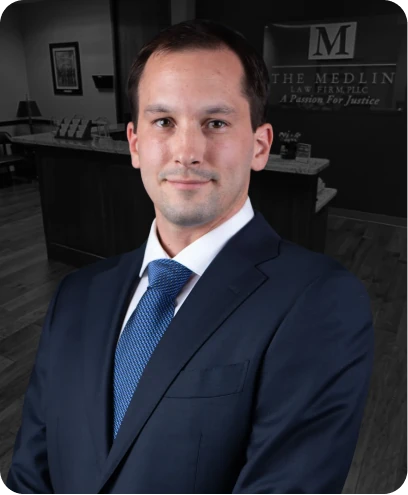
Chris Eggleston
Criminal Attorney
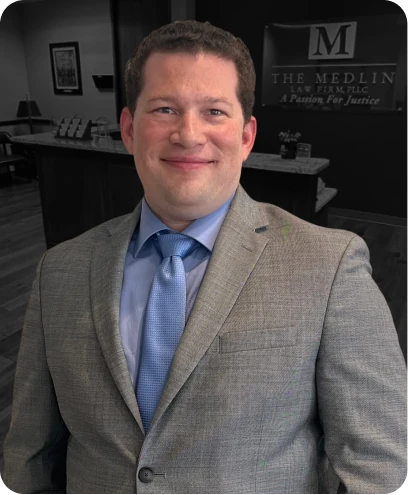
Jess Gambrell
Criminal Attorney
Kelvin M. Rodgers
Senior Associate Attorney
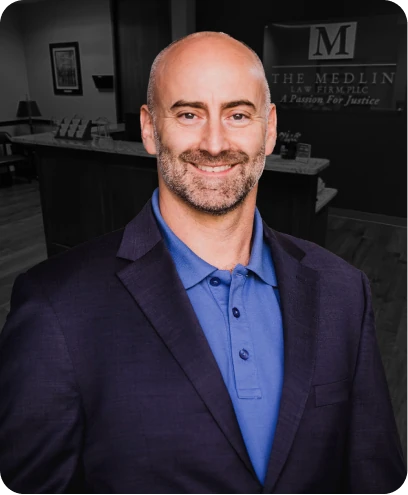
Lee Stringham
Criminal Attorney
Contact Us Today